Installation tools for industrial sectional doors. 🌎 WORLDWIDE DELIVERY!
Contact us: +358 400 679 300 / original@okwinder.fi
Installation tools for industrial sectional doors. 🌎 WORLDWIDE DELIVERY!
Contact us: +358 400 679 300 / original@okwinder.fi
Installing a residential sectional garage door may seem like a straightforward mechanical project — until you reach the torsion spring.
Tracks, panels, rollers, and even openers can give the impression that the job can be completed with basic tools, enough time, and patience. But once spring tension comes into play, the nature of the work changes completely. At this point, garage door installation stops being a DIY project and becomes a job for a professional.
A torsion spring is not just another component. It is a system that stores and releases the energy required to move and balance a door that can weigh 150 kilograms (330 lbs).
When the door closes, the spring winds up and stores energy. When the door opens, that energy is released to lift it. If this energy is released uncontrollably, it is transferred instantly into tools, structures, or the installer.
This is why torsion spring installation is the highest-risk step in the entire process.
Spring tensioning is not just physically demanding, it is precise balancing work. The spring tension must be adjusted to exactly the right level for the door to function safely and correctly.
A properly balanced door should remain at approximately waist height (around 1–1.5 meters / 3–5 feet) under normal conditions, without moving up or down on its own. If the door rises by itself, the spring is too tight. If it drops, the tension is insufficient.
This is not simply a matter of tightening, it is a controlled adjustment process where even small changes can have a significant impact on the result. This is also the stage where experience, proper tools, and controlled working methods matter the most.
Many people assume that installing a garage door is simply a matter of carefully following instructions.
In reality, working with torsion springs requires much more. It involves:
Even small mistakes — such as incorrect winding direction, wrong number of turns, or tool slippage — can lead to a sudden loss of control.
Professionals do not treat torsion spring installation as a routine step. Even with hundreds of installations behind them, the risk does not change.
What changes is the approach.
Instead of relying on physical strength and manual control, professionals use:
The goal is not just to complete the job, but to eliminate the key risk factors.
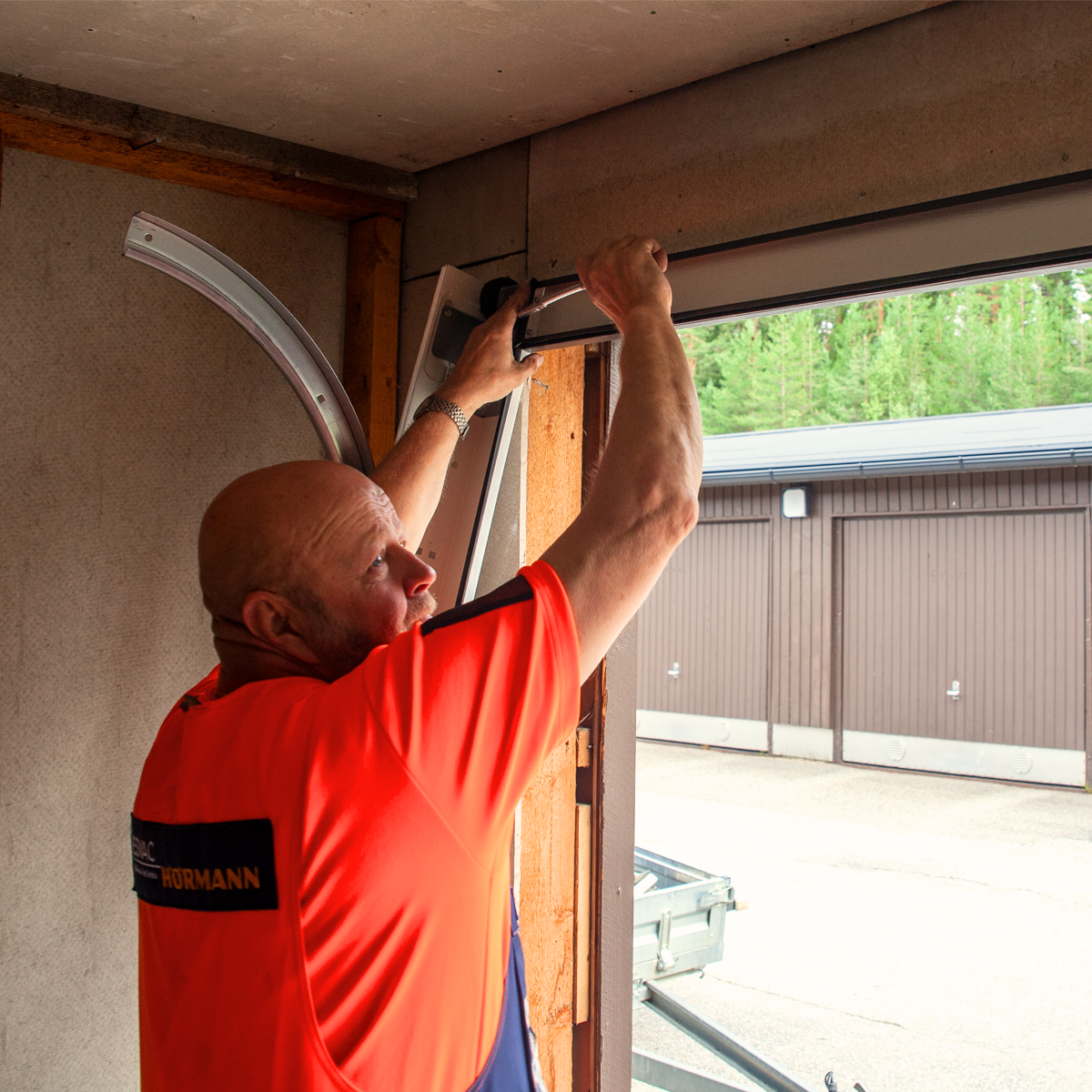
For decades, torsion springs have been tensioned using manual winding bars. They work, but they have a critical weakness: the entire load depends on the installer’s physical control.
If a bar slips out of the winding cone:
Most serious injuries occur at this stage.
Also read: SPRING WINDING BARS VS. SPRING TENSIONING TOOLS
Today, installation methods are shifting away from manual winding toward controlled tensioning systems.
A dedicated spring tensioning tool — such as the OK-WINDER® 200 — locks securely into the winding cone and remains engaged throughout the entire process, even if the drill used to operate it is removed mid-tensioning. This eliminates the biggest risk factor: loss of control.
For professionals, this means:
Learn more about professional spring tensioning tools: www.okwinder.com
In practice, no.
While some parts of a garage door installation may be manageable for an experienced individual, the door is only safe and functional once the spring is correctly tensioned. This step requires the right tools, training, and experience.
Working with torsion springs is not something you “try”, it is something you are trained and equipped to do.
Garage doors — and especially torsion springs — require controlled working methods and proper tools. For this reason, installation and maintenance work should always be carried out by a professional who can ensure safety and a reliable end result.
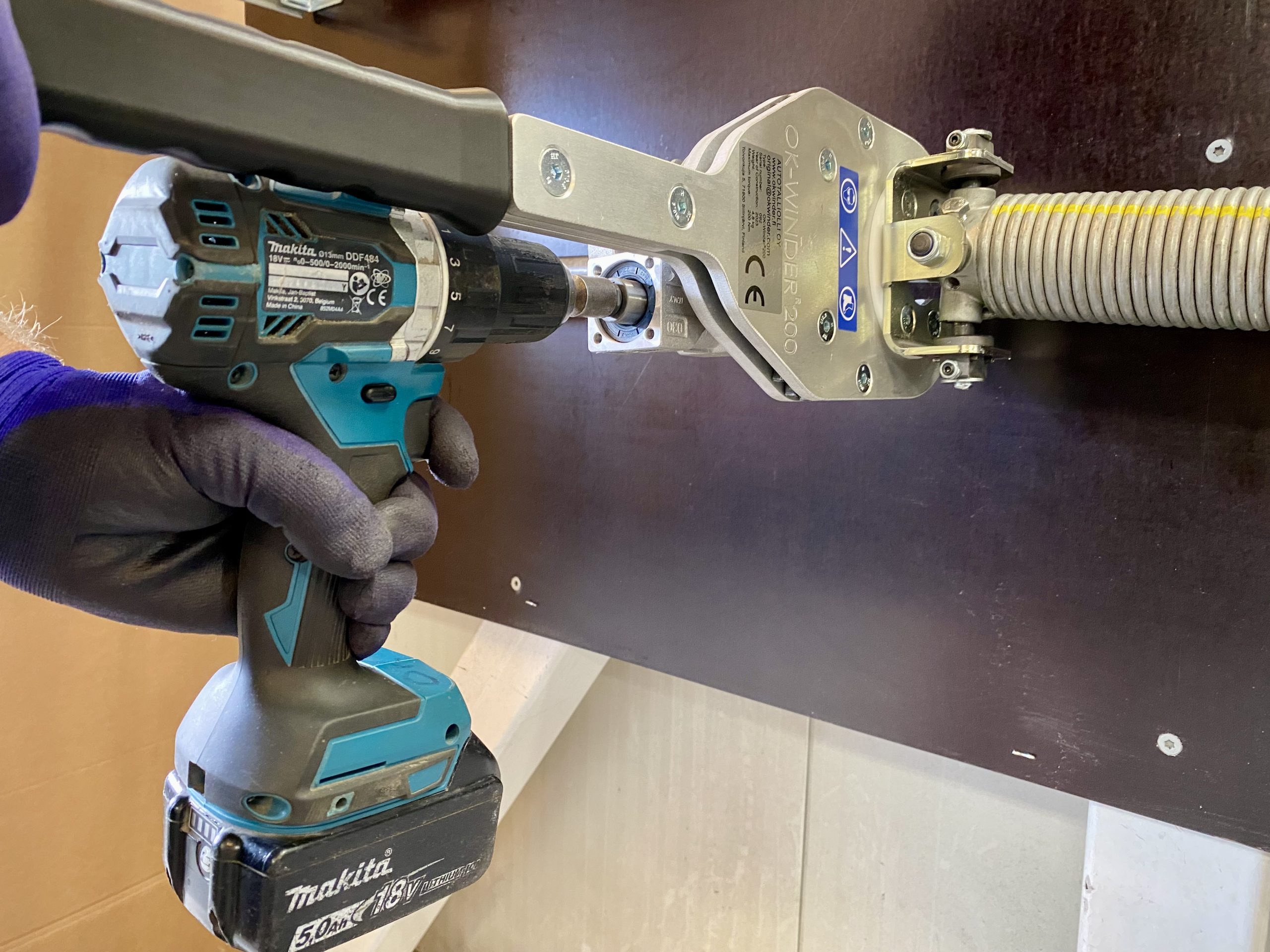
If you install garage doors for a living, the way you handle spring tension directly impacts safety, efficiency, and the quality of your work.
Moving from manual winding to a controlled tensioning system is one of the most effective ways to:
Explore professional tools: www.okwinder.com
